SPRING ROAD BANS
SASKATCHEWAN
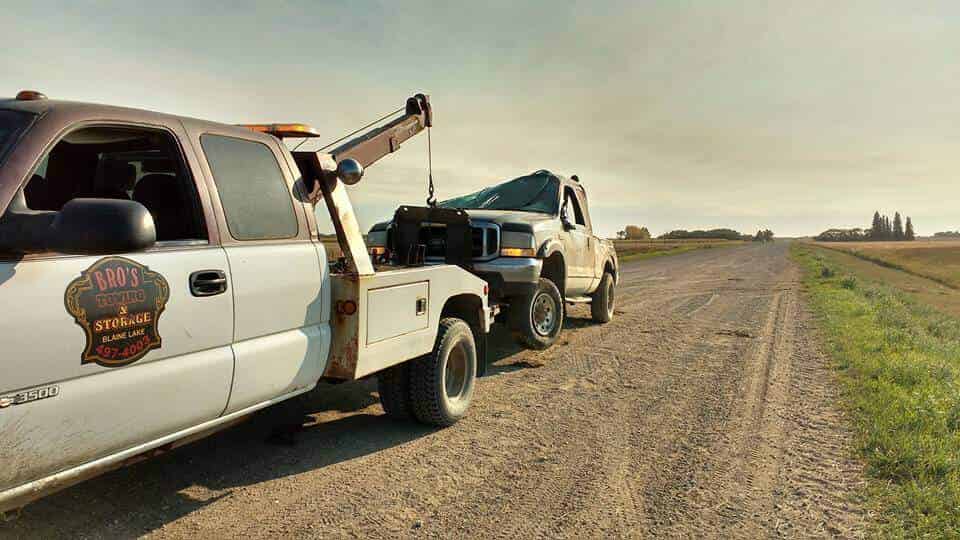
Every spring, Saskatchewan's rural roads thaw from the bottom up. The surface looks fine, but underneath, the ground stays saturated for weeks and can't support heavy loads. Vehicles break through, sink in, and end up stuck or in the ditch. We pull more vehicles out of mud in April and May than any other time of year. This is the working reference we update every season, so bookmark it before next breakup.
Saskatchewan's 2026 spring weight restrictions ran March 20 to early May. All RMs and the Saskatchewan Ministry of Highways lifted weight restrictions weeks ago, and normal hauling weights are back in effect province-wide and grid roads have largely dried out for summer. Mud and ditch recoveries have tapered off to the occasional farm approach or low-lying grid road after heavy June rain. With breakup behind us, the season's hazard shifts to summer highway construction zones. See our Saskatchewan highway construction guide for the orange-zone rules in effect now.
WHAT ARE SPRING ROAD BANS?
Spring weight restrictions (often called "spring road bans" or "spring breakup restrictions") are temporary load limits imposed on rural municipal roads and secondary highways when frost leaves the ground. The road structure weakens as ice within the base and subgrade melts, and heavy loads can cause permanent damage to the road surface. They are issued by individual Rural Municipalities and by the Saskatchewan Ministry of Highways under the Highways and Transportation Act.
Spring is also peak pothole season in Saskatchewan, because the freeze-thaw cycle tears up pavement. If you hit one hard, check your tires, rims, and suspension before continuing.
WHICH ROADS ARE AFFECTED?
Rural Municipal (RM) Roads
HIGH RISKGrid roads, township roads, and municipal roads maintained by RMs. These are the first to soften and the last to recover. Most spring towing calls come from RM roads.
Secondary Highways (Thin Membrane Surface)
HIGH RISKTMS highways: the ones with the thin layer of asphalt over gravel. They look like highways but behave like grid roads in spring. Shoulders are especially dangerous.
Primary Highways
LOWER RISKMajor routes like Highway 11, 16, and 1 are generally exempt from weight restrictions. However, their shoulders and approaches can still be soft, and vehicles that pull off onto the shoulder can sink.
Farmyard Access Roads
HIGH RISKPrivate approaches and yard access roads are often the worst. Heavy equipment leaves ruts, water pools in low spots, and trucks sink axle-deep trying to get in or out.
DANGER SIGNS
How to tell if a road is too soft before you're stuck on it.
If you see standing water or wet spots on a grid road, the base is saturated. The road may look solid but it's not.
Fresh ruts mean the surface is giving way. If you see deep ruts, don't try to drive through. You'll likely sink too.
If the road feels bouncy or your vehicle is leaving tracks, stop and turn around if you can. It's only getting worse ahead.
Frost boils are spots where underground ice is melting and pushing up the road surface. They indicate the base is compromised and can collapse under load.
The worst conditions come 1-2 weeks after the first sustained warm spell. The surface thaws fast but the water has nowhere to drain.
If restrictions are posted, the road is officially too soft for normal loads. Even lighter vehicles can get stuck on the shoulders.
WHEN YOU GET STUCK
Neither SGI nor CAA is coming to pull you out of mud on a grid road. You need a private ditch recovery service, typically $200-$500 for a standard pull (see our Saskatchewan towing rates for the full breakdown). If the job is moving a tractor or combine between quarters rather than pulling it out, that's farm equipment hauling, and ban season is exactly when the axle weights matter. Here's what we recover every spring.
The most common spring call. A half-ton or three-quarter-ton drives onto a grid road that looks fine, hits a soft spot, and sinks to the frame. Don't try to rock it out. You'll dig deeper.
Loaded trucks on roads with active weight restrictions. The truck breaks through the surface and sinks. Recovery requires heavy equipment and careful rigging to avoid further road damage.
Moving a tractor, air seeder, or combine between fields on a grid road during breakup. The weight-per-axle exceeds what the softened road can handle, and the equipment sinks or slides into the ditch.
Wet clay on grid roads is as slippery as ice. Vehicles slide off the crown of the road into the ditch, which is full of snowmelt. Winch recovery from a water-filled ditch requires the right equipment.
The quarter-mile approach road to the farmyard turns to mud every spring. Trucks, trailers, and equipment get stuck trying to get in or out. Often the worst conditions on the whole route.
SPRING ROAD BAN FAQ
SUNK ON A GRID ROAD?
Stop spinning your wheels. Call or text. We have winch trucks built for Saskatchewan mud and we're dispatching 24/7 through breakup season.