HIGHWAY CONSTRUCTION
SASKATCHEWAN
Every summer, Saskatchewan's highways fill with orange zones: paving crews, bridge work, culvert replacements, and lane closures. Slowdowns, gravel breaks, sudden stops, and rear-end collisions spike where traffic backs up. This is the working reference for the 2026 season: where the work is, the orange-zone rules and fines, and what to do if you break down or get hit in a work zone. Bookmark it before your next trip down Highway 11 or 16.
Saskatchewan's 2026 highway construction season is in full swing through June. Paving, bridge, and culvert crews are working Highways 11, 12, and 16 across our service area right now, with most projects running into late fall. The Ministry of Highways posts a Weekly Orange Zone Construction Update every Friday, and the Highway Hotline maps live closures, detours, and work zones three times a day. Expect lane reductions, pilot-truck escorts, gravel surfaces, and reduced 60 km/h zones, plus the rear-end and gravel-break breakdowns that come with summer traffic backing up.
WHAT IS AN ORANGE ZONE?
An "Orange Zone" is Saskatchewan's term for a highway work zone, the stretch between the orange signs where crews and equipment are working. Inside it, speed limits drop, lanes narrow or close, and the road surface can switch to gravel or fresh, soft asphalt without warning. The Ministry of Highways and its contractors run these zones across the province from spring through fall under the Highways and Transportation Act.
Heading out? Check live conditions on the Highway 11, Highway 12, and Highway 16 condition pages before you go.
WHERE THE WORK IS
The corridors we run every day, and what to expect on each through the 2026 season. For the exact current closures, always check Saskatchewan road conditions on the Highway Hotline before you drive.
Highway 11: Saskatoon to Prince Albert
HEAVY WORKThe busiest corridor in our service area. Twinned for most of its length, it sees regular resurfacing, median, and interchange work each summer, so expect lane closures and reduced-speed orange zones, especially near Saskatoon and the Prince Albert approaches.
Highway 16: Yellowhead (North Battleford to Saskatoon to the east)
HEAVY WORKA major freight route under continual upgrade. In 2026 the province is widening and repaving Territorial Drive in North Battleford between Highway 16 and Airport Road, on top of routine Yellowhead resurfacing work.
Highway 12: Saskatoon to Blaine Lake & north
ACTIVE ZONESOur home corridor. A two-lane highway with thin-membrane sections that get patched and resurfaced through the summer. Single-lane alternating traffic and pilot trucks are common between Blaine Lake and Saskatoon.
Urban Highway Connectors & grid detours
ACTIVE ZONESThe Urban Highway Connector Program funds work on highway connections through towns and cities across the province. When highways close, traffic detours onto RM grid roads that aren't built for the volume, and soft shoulders and ditches catch the unwary.
ORANGE ZONE RULES & FINES
The rules that keep you ticket-free and out of a crash when traffic squeezes down.
The moment you pass workers or occupied equipment, the limit is 60 km/h, regardless of the highway's normal speed. Watch for the flag person and the lead pilot truck.
Speeding past highway workers starts around a $240 base fine, with an added per-kilometre charge for every km over. It adds up to hundreds in a hurry.
Fresh chip seal throws stones, milled pavement is grooved and rough, and lane edges can drop several inches. Slow down before the surface changes, not after.
Rear-end collisions are the #1 work-zone crash. Traffic stops suddenly when a lane closes, so leave a big gap and watch far ahead, not just the bumper in front of you.
On single-lane alternating sections, a lead vehicle guides you through. Stay behind it at its pace. The oncoming lane is live the moment it clears.
When you see 'lane ends ahead,' merge in good time and take turns. Last-second merges and shoulder-runners cause the brake-checks that trigger pileups.
TROUBLE IN A WORK ZONE
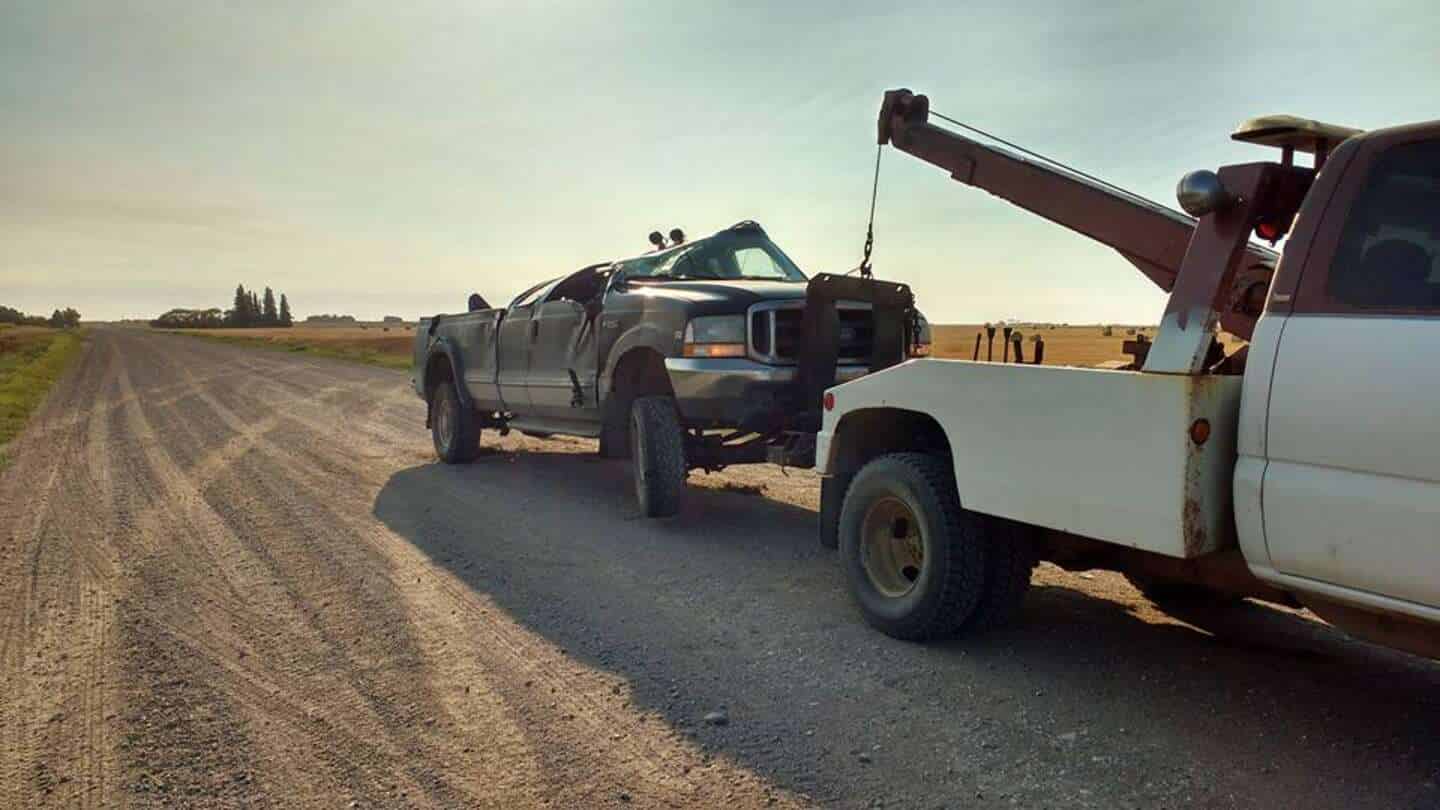
Work zones are where summer breakdowns and crashes cluster. If you're stopped in a live lane, getting clear safely matters most. Here's what we deal with all season, from overheating in backups to gravel-break flats and detour ditch recoveries. Come August, the orange zones and the grain trucks share the same road, so if you need a combine, header or tractor moved around a work zone, that's farm equipment hauling. If a combine or loaded grain truck is already down, whether in the field, in the approach, or rolled in the ditch, that's harvest recovery, and we run it 24/7 through the season.
Traffic backs up at a lane closure, someone isn't watching, and you're hit from behind. If a vehicle isn't driveable, we tow it clear of the live lane fast. Getting you and the car out of a dangerous work zone is the priority.
Fresh chip seal and gravel breaks throw stones at speed. A blown tire or shattered windshield on the highway shoulder needs a safe recovery, especially with traffic squeezing past in a narrowed lane.
Idling in a summer work-zone queue with the A/C running pushes cooling systems hard. If your temp gauge climbs and the car quits, don't fight it in traffic. We'll get it to a shop.
When a highway closes, the detour often runs onto RM grid roads. Loose gravel, soft shoulders, and ditches catch vehicles at highway speed. Winch recovery from a detour ditch is a routine summer call for us.
A breakdown inside an active work zone is one of the most dangerous places to be stopped. Put on hazards, get well off the road if you can, and call. We know these corridors and dispatch 24/7.
HIGHWAY CONSTRUCTION FAQ
STUCK IN AN ORANGE ZONE?
Broken down, blown a tire on chip-seal gravel, or hit in stopped construction traffic? Call or text. We know the Hwy 11, 12, and 16 corridors and dispatch 24/7 all season.