HIT A DEER?
SASKATCHEWAN
Deer come out of the ditch with no warning, and on a Saskatchewan highway at 100 km/h, a collision happens in a heartbeat. Whether your car is driveable or wrecked in the ditch, here's exactly what to do, how the SGI claim works, and how to tell if it's safe to drive away or time to call a tow.
Just hit a deer? Get off the road, hazards on, and check that everyone's okay before you worry about the vehicle. Wildlife collisions injure an average of 367 people a year in Saskatchewan. Most happen at dawn, dusk, and through the fall rut. If your vehicle isn't safe to drive, don't risk it: call (306) 291-8567 and we'll get you and the car off the highway.
WHAT TO DO RIGHT NOW
The first few minutes matter. Stay calm and work through it in order. Your safety comes before the vehicle.
Get the vehicle as far onto the shoulder as you safely can, out of the live lane. Turn on your hazard lights so other drivers, and any tow or emergency crews, can see you. On a dark highway, this is the most dangerous part.
People first. If anyone is hurt, call 911 immediately. Even a low-speed deer strike can set off airbags and cause whiplash, so take a moment before you climb out.
An injured deer is unpredictable and dangerous. It can thrash, kick, or bolt into traffic. Don't approach it or try to move it. Keep yourself and your passengers well back from the road.
If there's significant vehicle damage, an injured animal on the road, or any injuries, report it to the RCMP or local police. They'll log it and arrange for the animal if needed. Get a file number for your insurance claim.
Take photos of the vehicle, the damage, the road, and the surroundings while you wait. It helps your SGI claim go smoothly and documents what happened.
Walk around the vehicle and check it over (see the safety checklist below). If anything's leaking, dragging, or the lights are out, do not drive it. Call (306) 291-8567 and we'll come get it.
WHEN & WHERE DEER STRIKE
Most wildlife collisions in Saskatchewan are predictable if you know the pattern. Scan the ditches, shoulder to shoulder, especially in these conditions.
IS IT SAFE TO DRIVE?
Deer strikes hit the front of the vehicle, exactly where the radiator, lights, and cooling system live. Driving on after the hit can turn a body-shop claim into a blown engine. If you see any of these, call for a tow instead.
Green, orange, or pink fluid on the ground means the radiator or a line is cracked. Drive it and you'll overheat and seize the engine within kilometres.
A damaged radiator or fan shows up as a rising temp gauge. If it heads for the red, shut it off. Don't try to limp home.
Front-end impacts knock out lights. Driving a dark highway with no headlights isn't an option. It's a tow.
A hood that won't close can fly up at speed. Steam or spraying fluid means a breached cooling or A/C system. Don't drive it.
If the car pulls hard, a tire is flat, or something is scraping or dragging, the steering or suspension may be bent. Get it on a flatbed.
Deployed airbags mean a serious impact, and the car usually isn't safe or legal to drive. It needs to go on a deck.
SGI & YOUR CLAIM
In Saskatchewan, hitting a deer is handled by SGI as a single-vehicle collision claim. As long as you have the right coverage, the damage is covered, minus your deductible. You don't get a demerit or fault for an unavoidable wildlife collision.
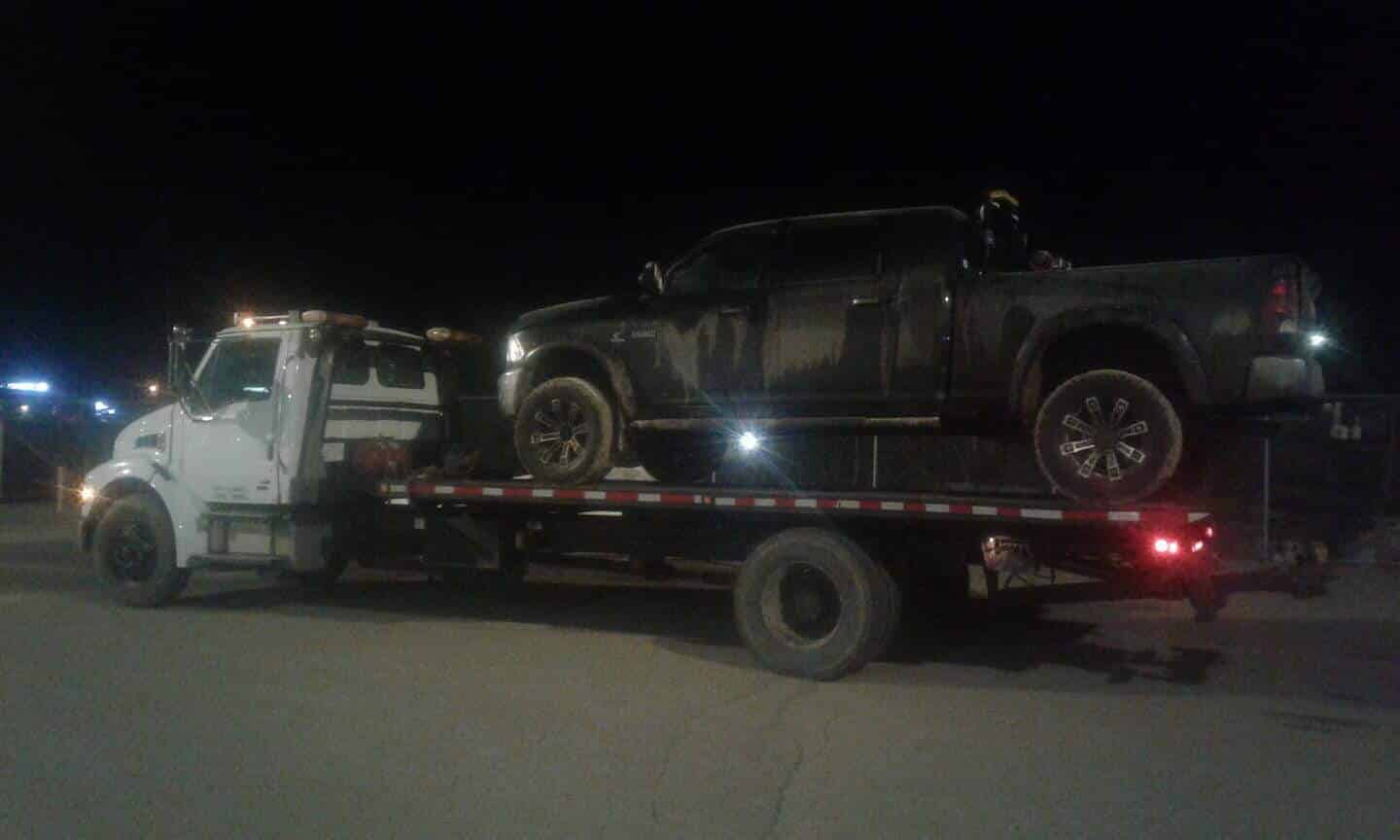
If the vehicle is still safe to drive, you can carry on and report the claim to SGI afterward. If it isn't, get it towed somewhere safe first. Note that SGI's towing coverage only kicks in for a covered collision where the vehicle isn't driveable, so keep your tow receipt and file number.
A deductible applies to wildlife-collision claims, and the exact amount depends on your policy, so check with SGI or your broker. For the specifics on what SGI does and doesn't cover for towing, see our SGI towing coverage guide.
Ended up off the road? That's a ditch recovery, and we winch out deer-strike vehicles all through the fall rut. Related: Does SGI cover towing?, Highway 11 conditions, and our Saskatchewan towing rates.
HIT A DEER FAQ
DEER WRECK YOUR CAR?
If it's not safe to drive, don't risk the engine getting it home. Call or text. We run accident recovery 24/7 across central Saskatchewan and the Hwy 11, 12, and 16 corridors.